Berkas:PIA21425 - TRAPPIST-1 Statistics Table.jpg



Ringkasan
| Deskripsi |
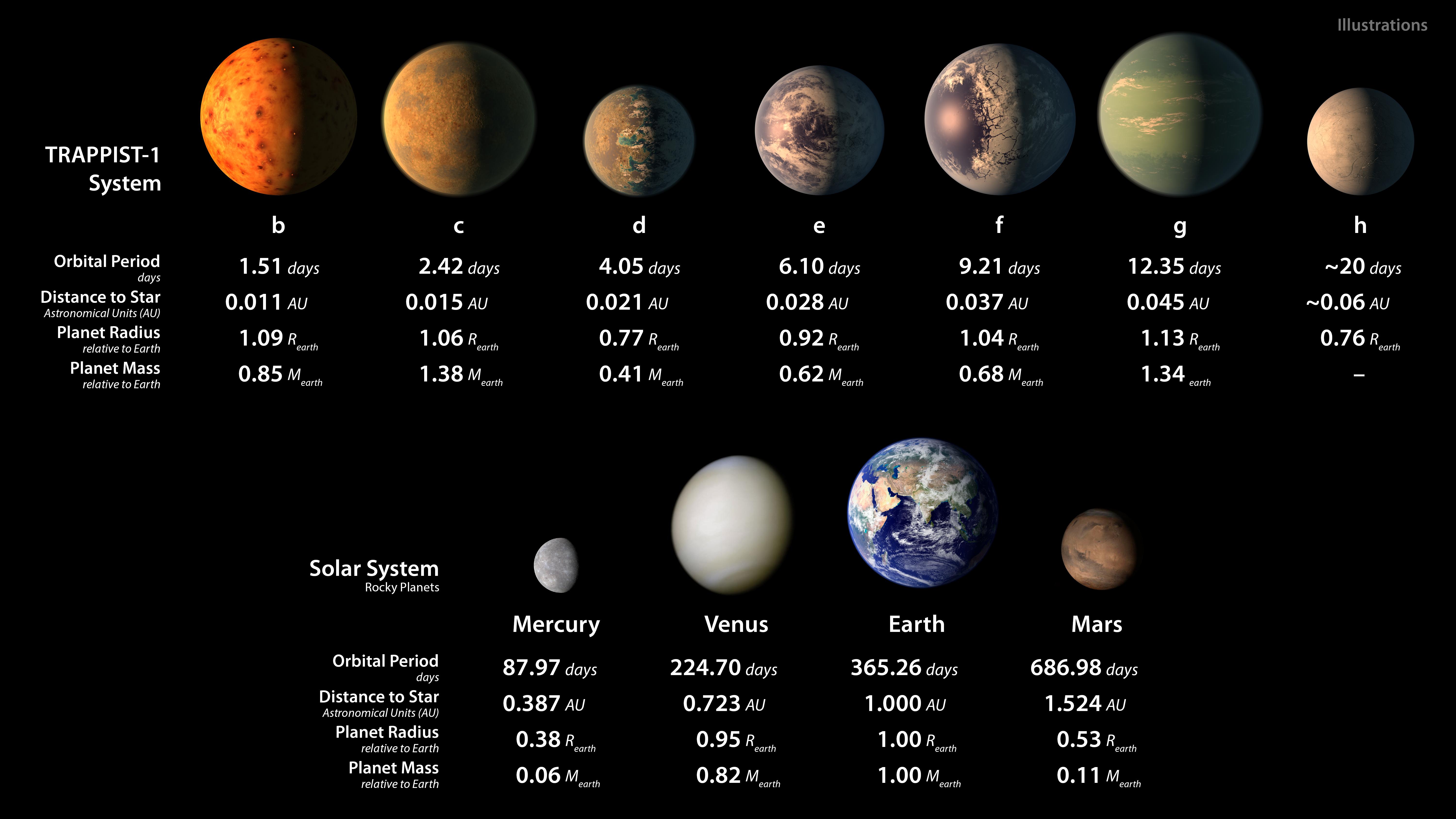
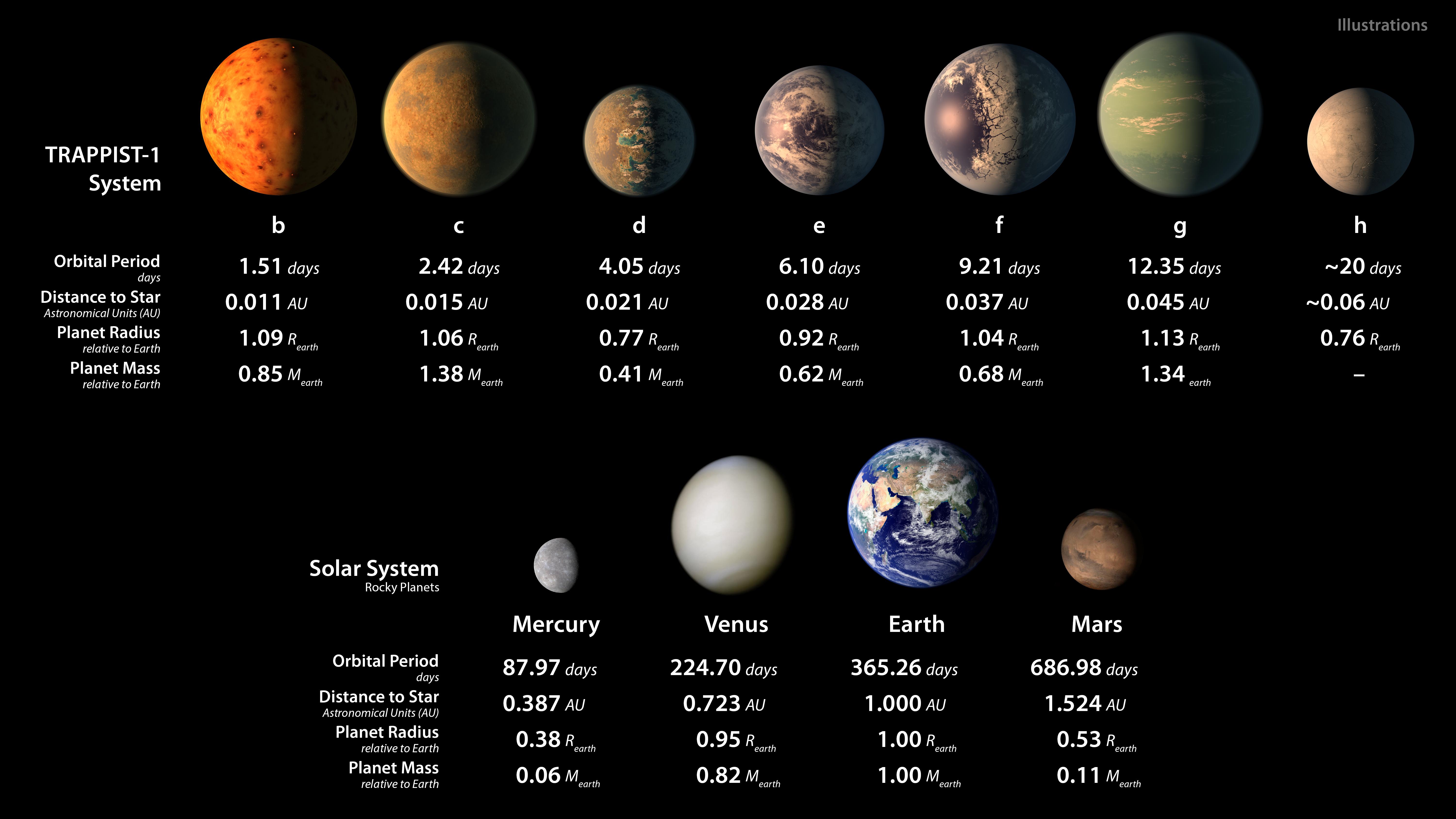
English: This chart shows, on the top row, artist concepts of the seven planets of TRAPPIST-1 with their orbital periods, distances from their star, radii and masses as compared to those of Earth. On the bottom row, the same numbers are displayed for the bodies of our inner solar system: Mercury, Venus, Earth and Mars. The TRAPPIST-1 planets orbit their star extremely closely, with periods ranging from 1.5 to only about 20 days. This is much shorter than the period of Mercury, which orbits our sun in about 88 days.
The artist concepts show what the TRAPPIST-1 planetary system may look like, based on available data about their diameters, masses and distances from the host star. The system has been revealed through observations from NASA's Spitzer Space Telescope and the ground-based TRAPPIST (TRAnsiting Planets and PlanetesImals Small Telescope) telescope, as well as other ground-based observatories. The system was named for the TRAPPIST telescope. The seven planets of TRAPPIST-1 are all Earth-sized and terrestrial, according to research published in 2017 in the journal Nature. TRAPPIST-1 is an ultra-cool dwarf star in the constellation Aquarius, and its planets orbit very close to it. NASA's Jet Propulsion Laboratory, Pasadena, California, manages the Spitzer Space Telescope mission for NASA's Science Mission Directorate, Washington. Science operations are conducted at the Spitzer Science Center at Caltech, also in Pasadena. Spacecraft operations are based at Lockheed Martin Space Systems Company, Littleton, Colorado. Data are archived at the Infrared Science Archive housed at Caltech/IPAC. Caltech manages JPL for NASA. For more information about the Spitzer mission, visit http://www.nasa.gov/spitzer and http://spitzer.caltech.edu. |
| Tanggal | 22 February 2017 (published 22 February 2017) |
| Sumber | Catalog page · Full-res (JPEG · TIFF) |
| Pembuat | NASA/JPL-Caltech |

|
Gambar atau video ini telah dikatalogkan oleh Laboratorium Jet Propulsion milik National Aeronautics and Space Administration (NASA)dibawah ID Foto: PIA21425. Label ini tidak menunjukkan status hak cipta dari berkas. Label hak cipta yang biasa tetap dibutuhkan. Lihat Commons:Lisensi. Bahasa lain:
|
 |
This media is a product of the Spitzer Space Telescope Credit and attribution belongs to the mission team, if not already specified in the "author" row |
Lisensi

|
Berkas ini berada dalam domain publik di Amerika Serikat karena semata-mata diciptakan oleh NASA. Kebijakan hak cipta NASA menyatakan bahwa "materi NASA tidak dilindungi oleh hak cipta kecuali dicatat". (Lihat Template:PD-USGov, Halaman kebijakan hak cipta NASA atau JPL Image Use Policy.) |  |
 |
Peringatan:
|

Riwayat berkas
Klik pada tanggal/waktu untuk melihat berkas ini pada saat tersebut.
| Tanggal/Waktu | Miniatur | Dimensi | Pengguna | Komentar | |
|---|---|---|---|---|---|
| terkini | 22 Februari 2017 19.16 | | 6.000 × 3.375 (911 KB) | wikimediacommons>PhilipTerryGraham | User created page with UploadWizard |
Penggunaan berkas
Halaman berikut menggunakan berkas ini:
